Keyhole Canyon
MVP
RopeWiki.com — Without this resource, I’m not sure how I would have found this amazing spot.
Canyon Review
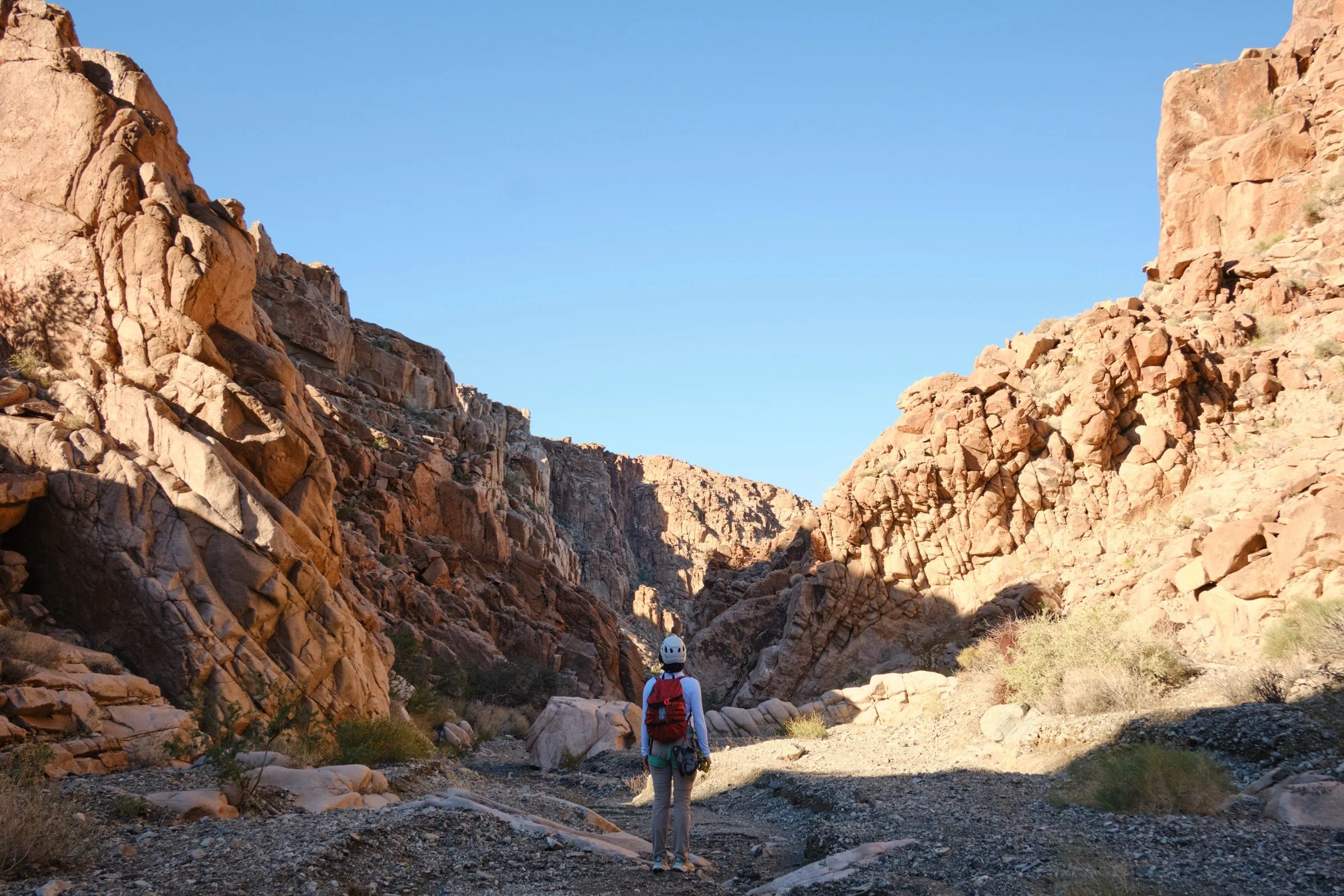
Cassie and I went canyoneering at Keyhole Canyon.
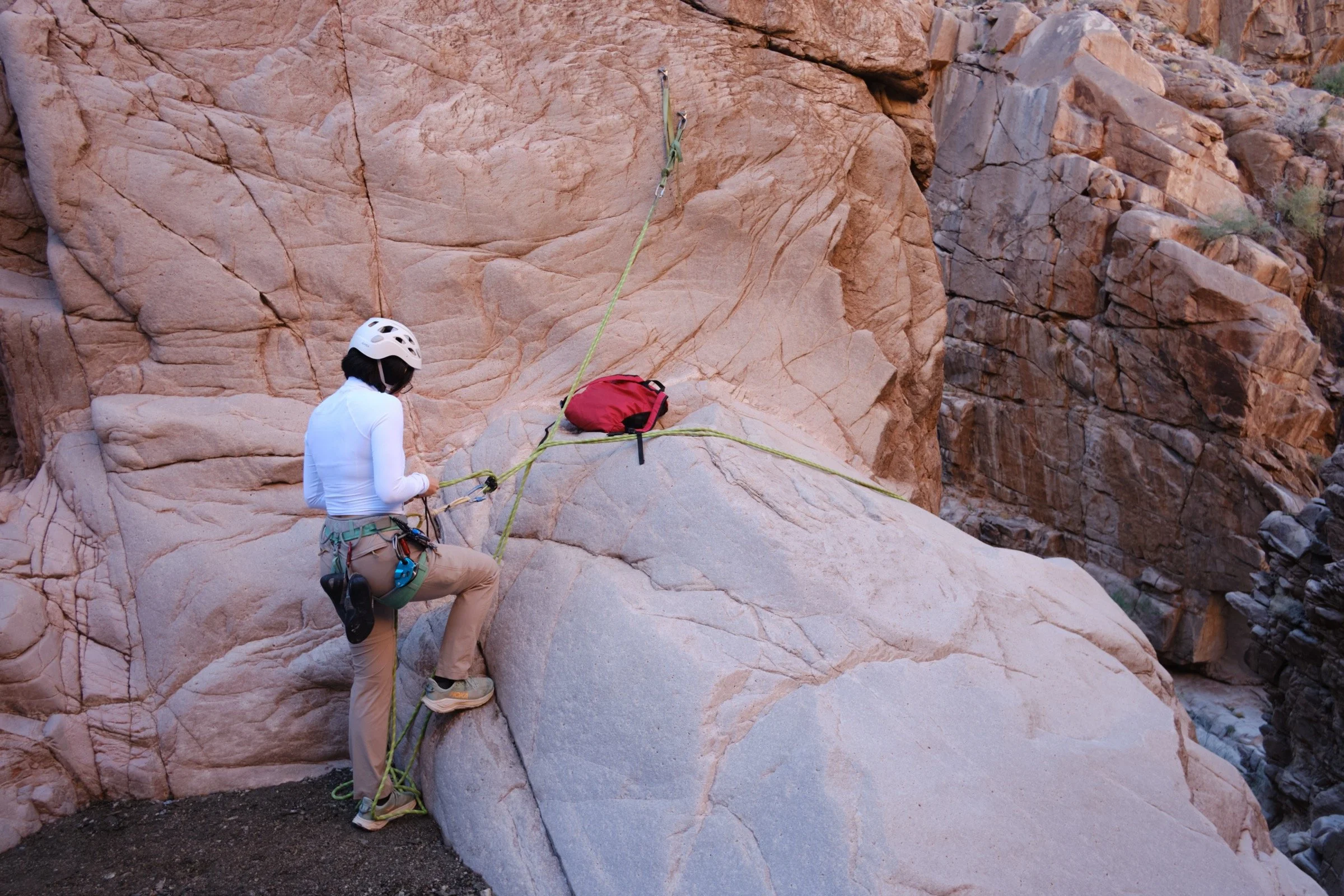
It was an easy canyon for rock climbers (like us) as all anchors except one were bolted. The bolts were solid with no spinners; the webbing that extended the anchors was in good condition as well.
The canyon rappels were relatively straightforward with only two of the rappels having a trickle of water. Otherwise, the canyon was dry.
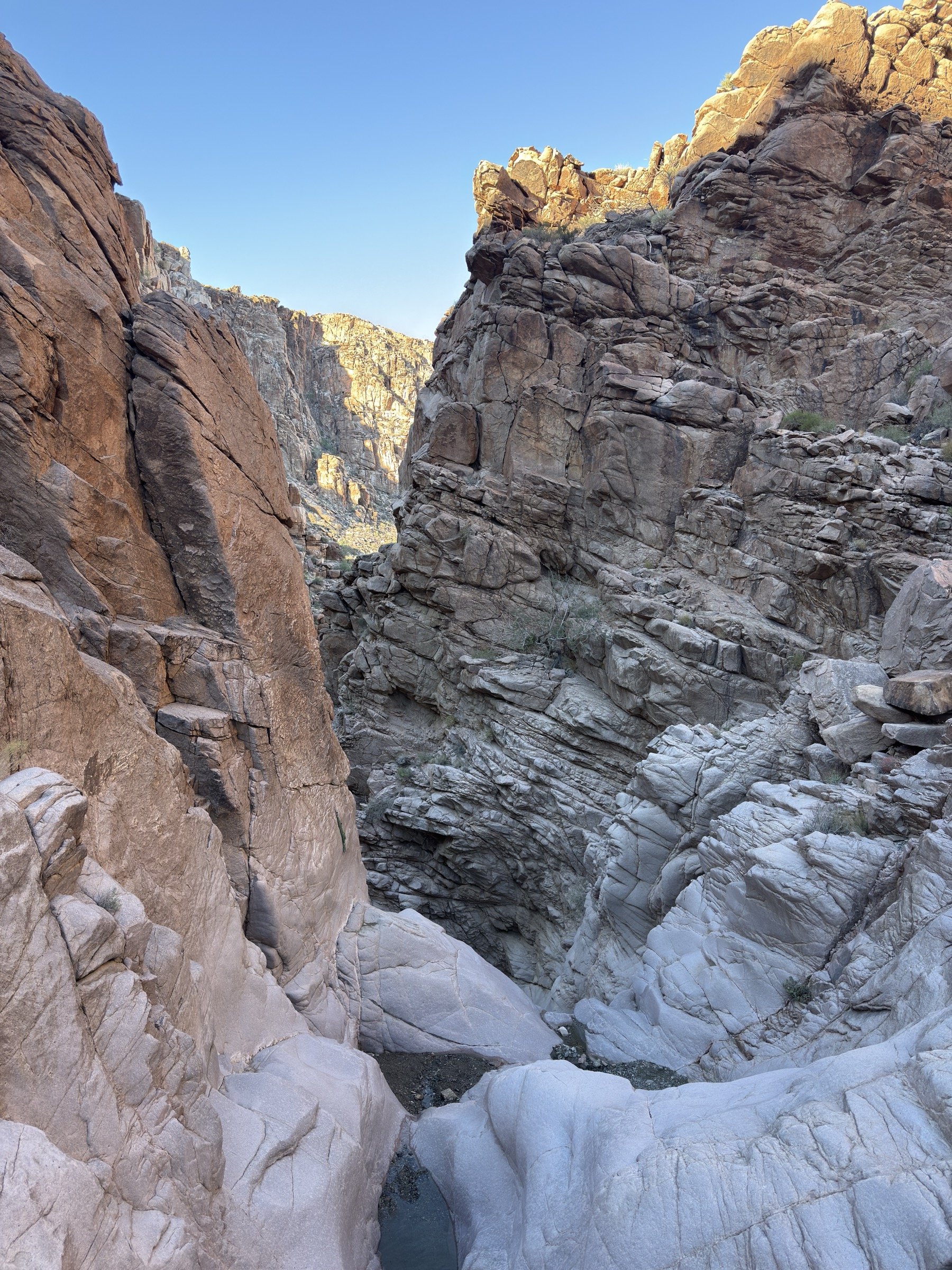
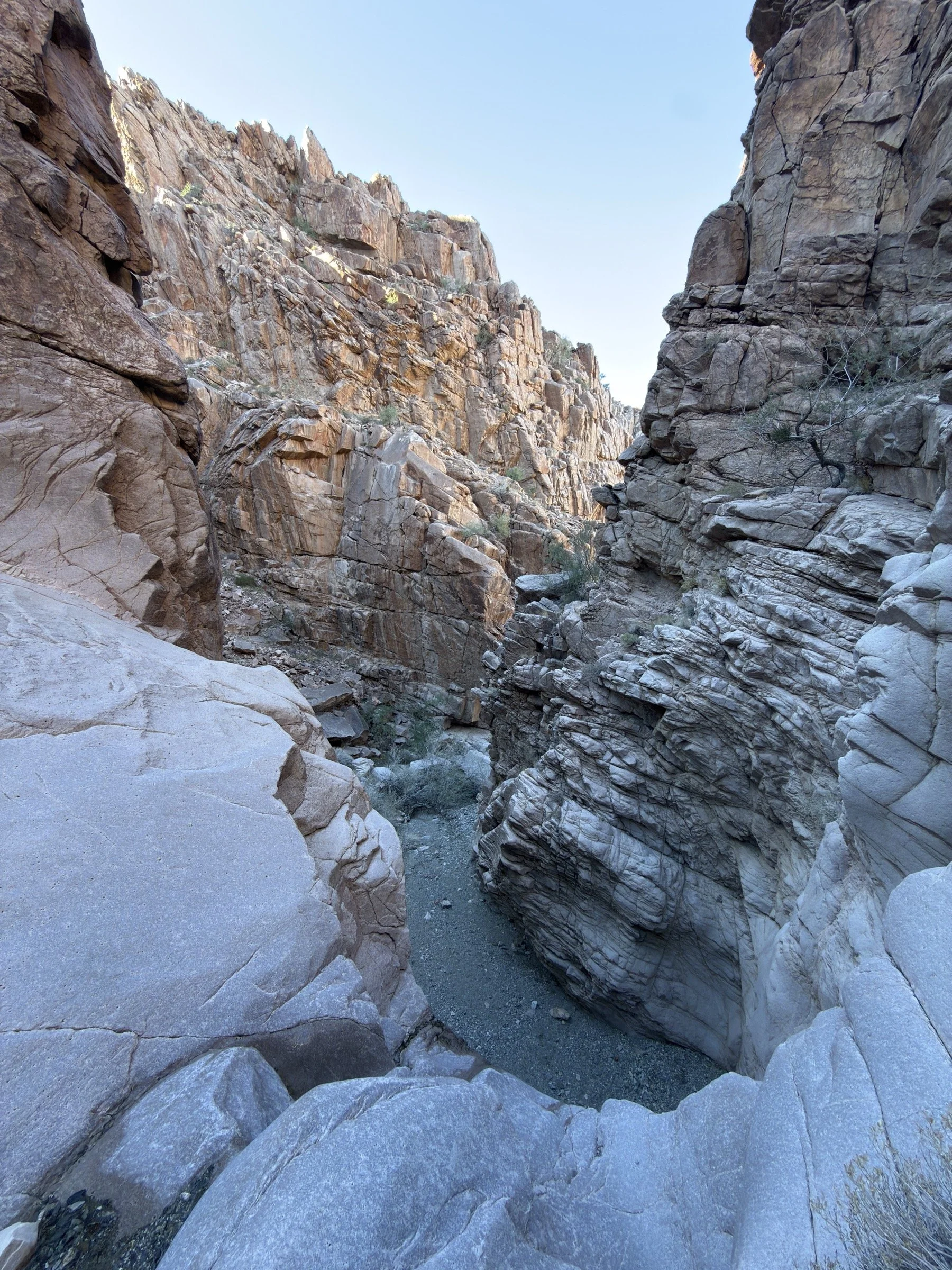
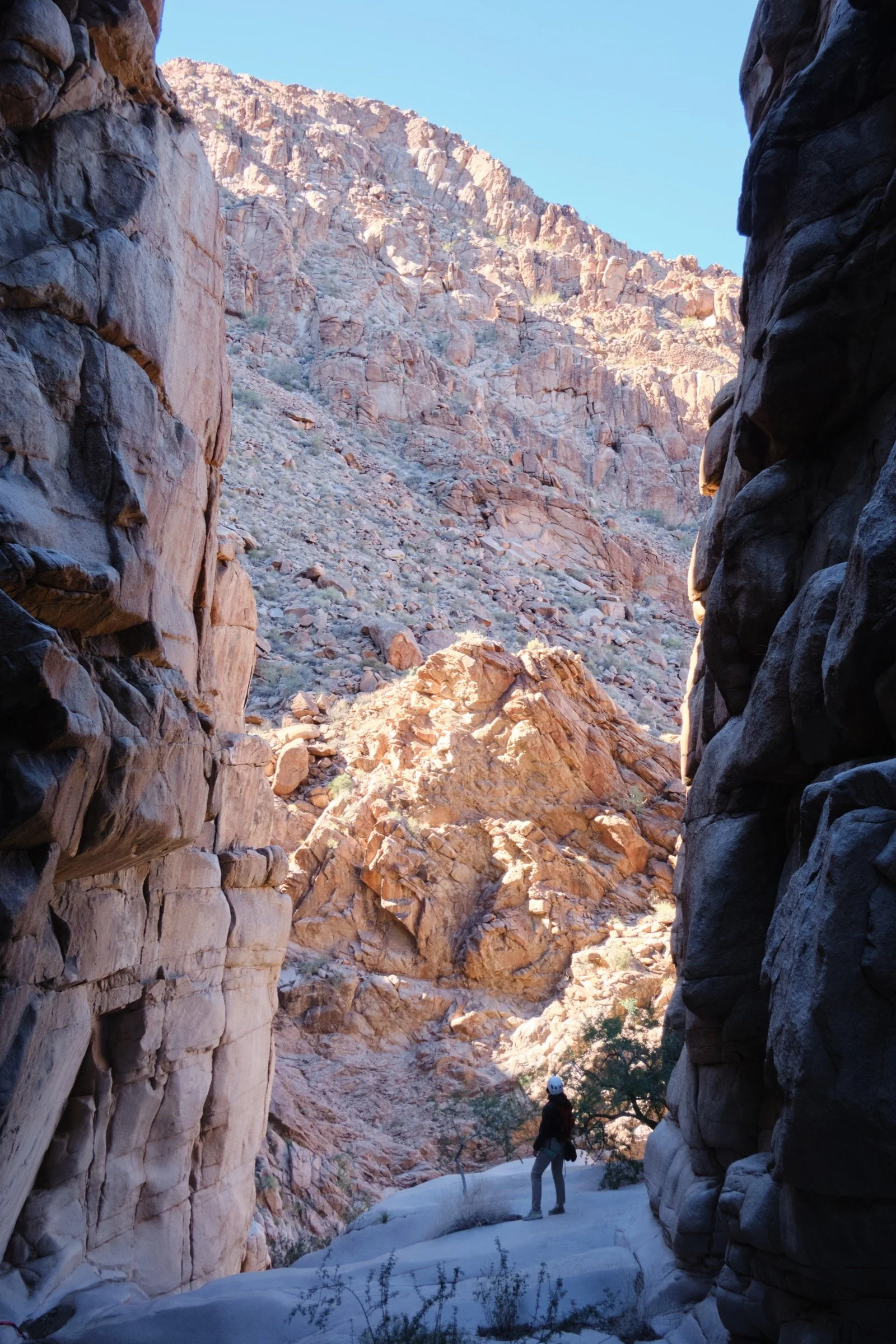
The views were beautiful with pretty light brown rocks surrounding us.
There was not too much vegetation, but that was expected of a canyon in southern Nevada.
The hike up to the start of the canyon was relatively easy, with it being less than two miles to hike up.
What I Learned
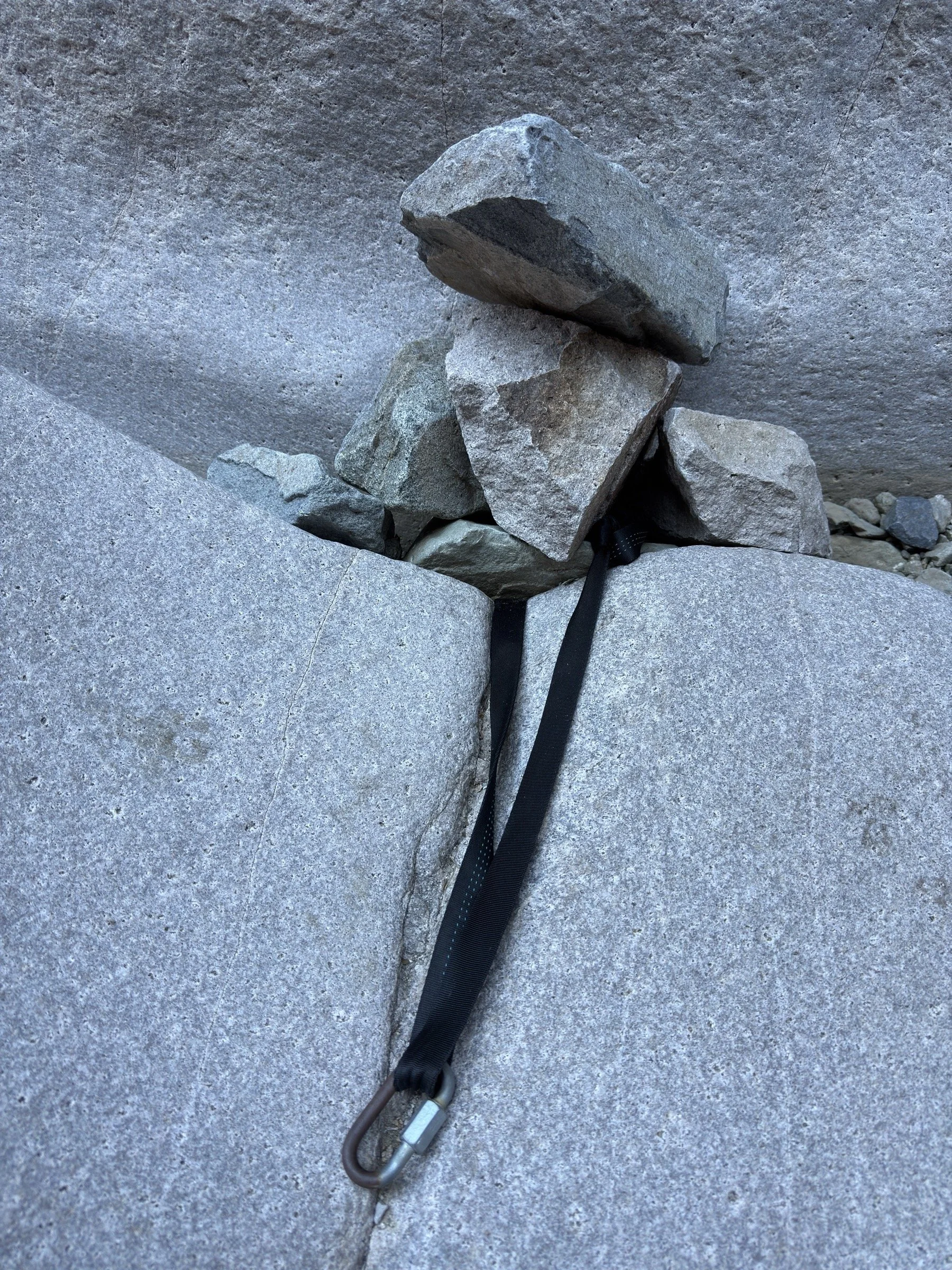
The stacked-rock anchor
I had only canyoneered once before, which was a wet canyon with short waterfalls. This canyon was the opposite, given that it was dry (which makes it much easier, IMHO) and that the rappels were longer. I enjoy rappelling, so the longer rappels were welcomed.
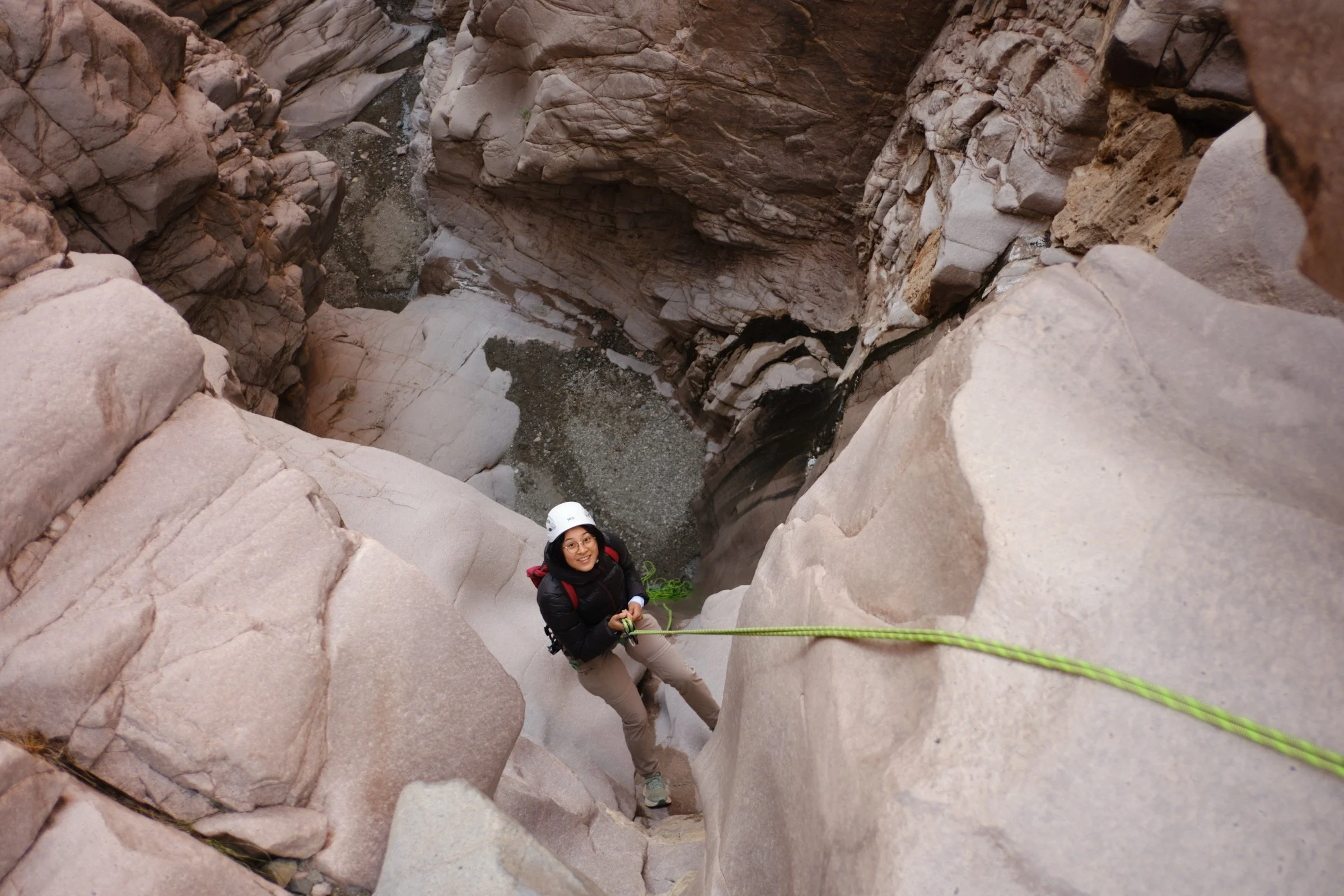
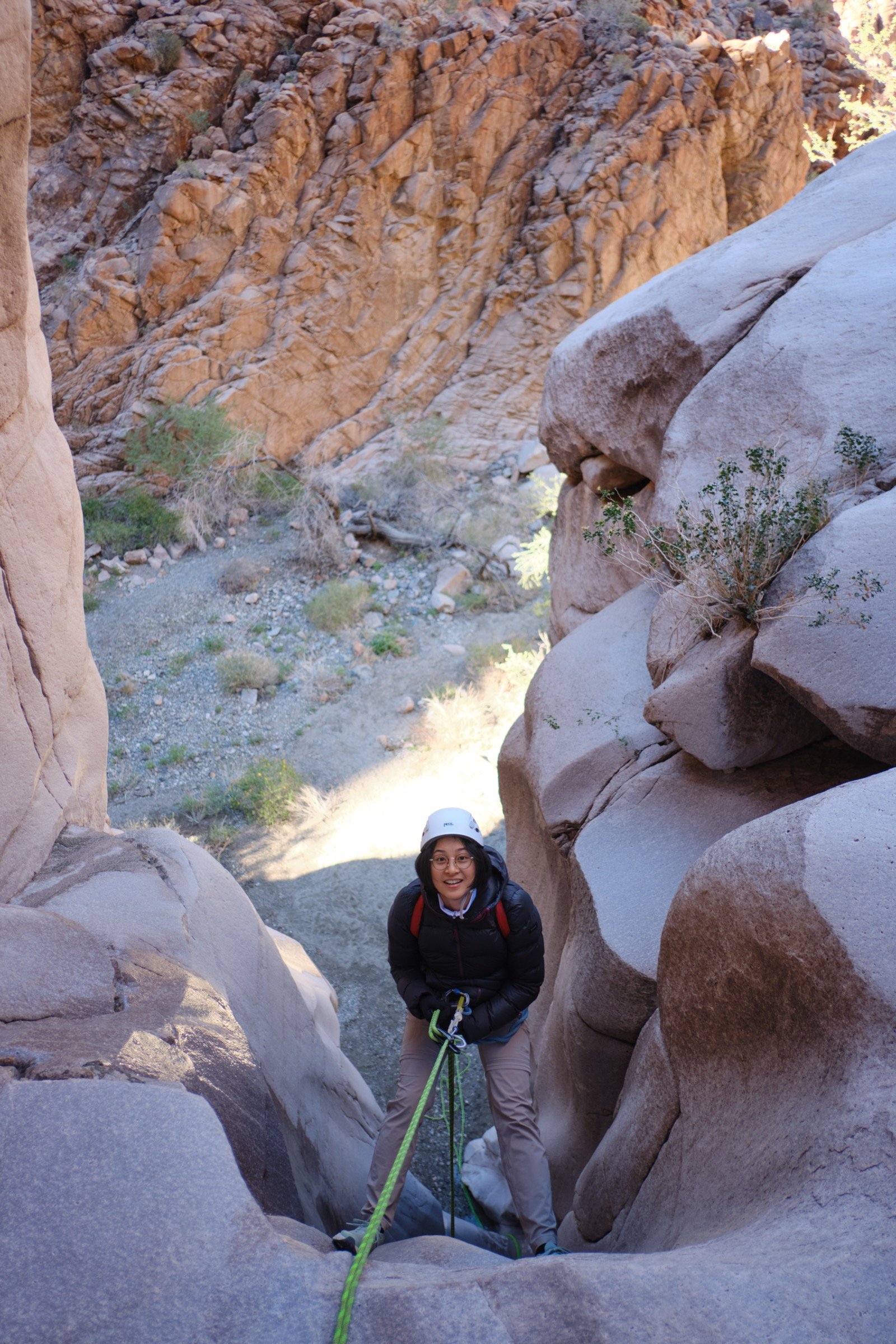
This was Cassie’s first time canyoneering, so it was extra special for me, since I got to show her something new. She had a great time and we hope to do more canyoneering in the future.
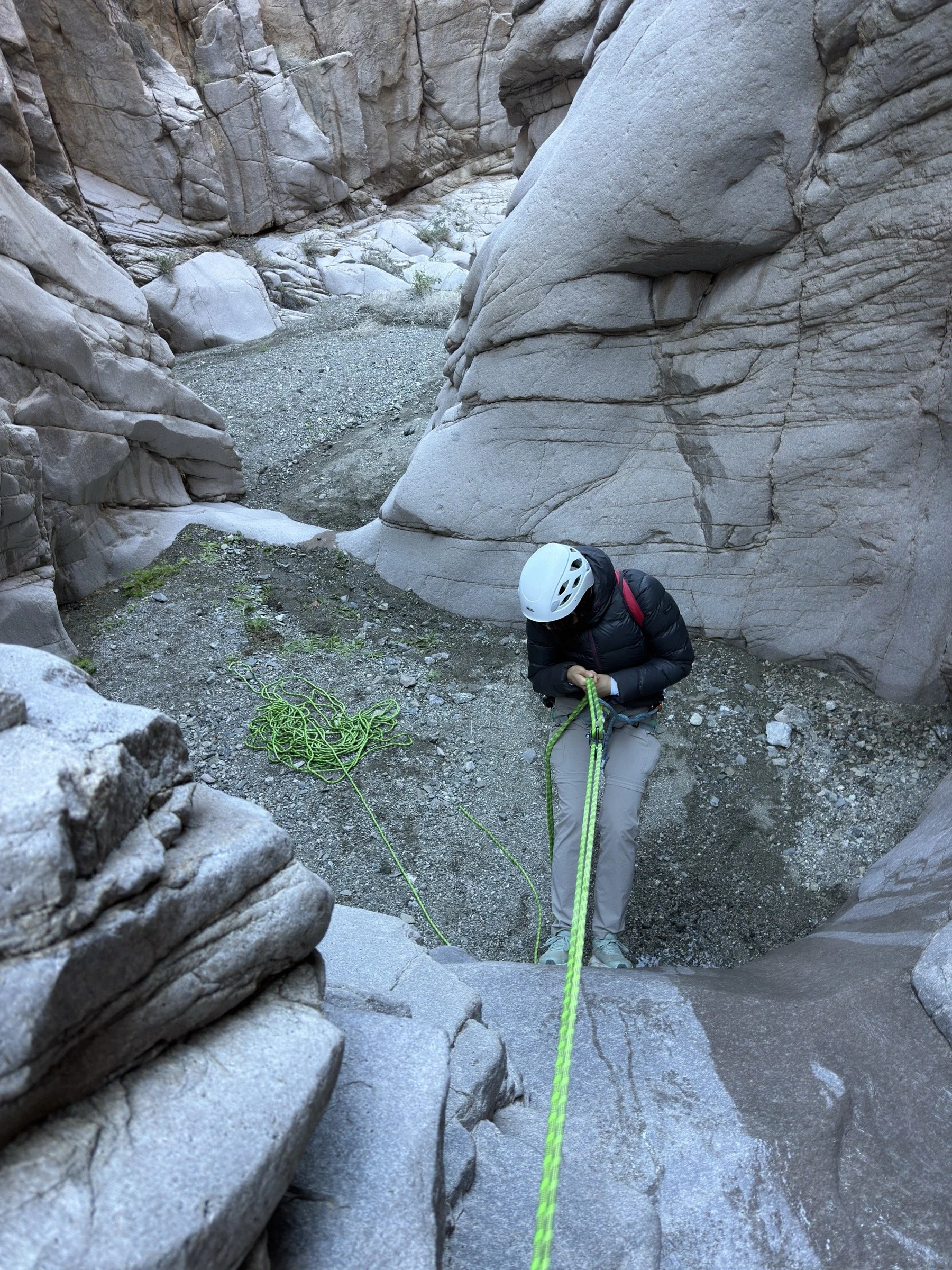
There was a super short, stacked-rock rappel anchor that probably could have been skipped by down climbing or sliding down a rock. But given that we wanted to try new things, we decided to rappel it. Cassie went first with me backing up the rope. The rock stack, even though it was just a few rocks wedged together, performed well and it did not budge at all during either of our rappels. I think it’ll take many more rappels before I really trust it though.
Because I had found this place through a canyoneering website, I was not aware that Keyhole Canyon was a big rock climbing and boulder destination. As we did our final rappel, we saw many climbers climbing, and we promised ourselves to come back and rock climb some of these sick-looking routes!
The second anchor was a steel chain anchor, and someone stated that this type of anchor had a higher chance of slipping compared to a webbing anchor. I didn’t understand this until we tried it out. The reason is that because a steel chain can get stuck in an unequalized position, the rappel can occur off of just one taught side, with the other side being slack. The unfortunate thing about this is that there is a chance that during the rappel the chain could equalize if it slips, at which point the person being rappelled may lose control or get jostled enough to lose control of the rope (given that most canyoneers do not back up the rappel, this would be really bad). Fortunately for us, while for both of our rappels the chain was not equalized (despite my best effort), the chain did not slip, and we were able to rappel without any issue.
We went really slow compared to the trip reports I had read about this canyon because we both backed up our rappels and rappelled at every opportunity (even for really short sections that others would probably slide or jump down). I’m glad there was no one else canyoneering, though if another party were to overtake us, we would have totally let them go first.
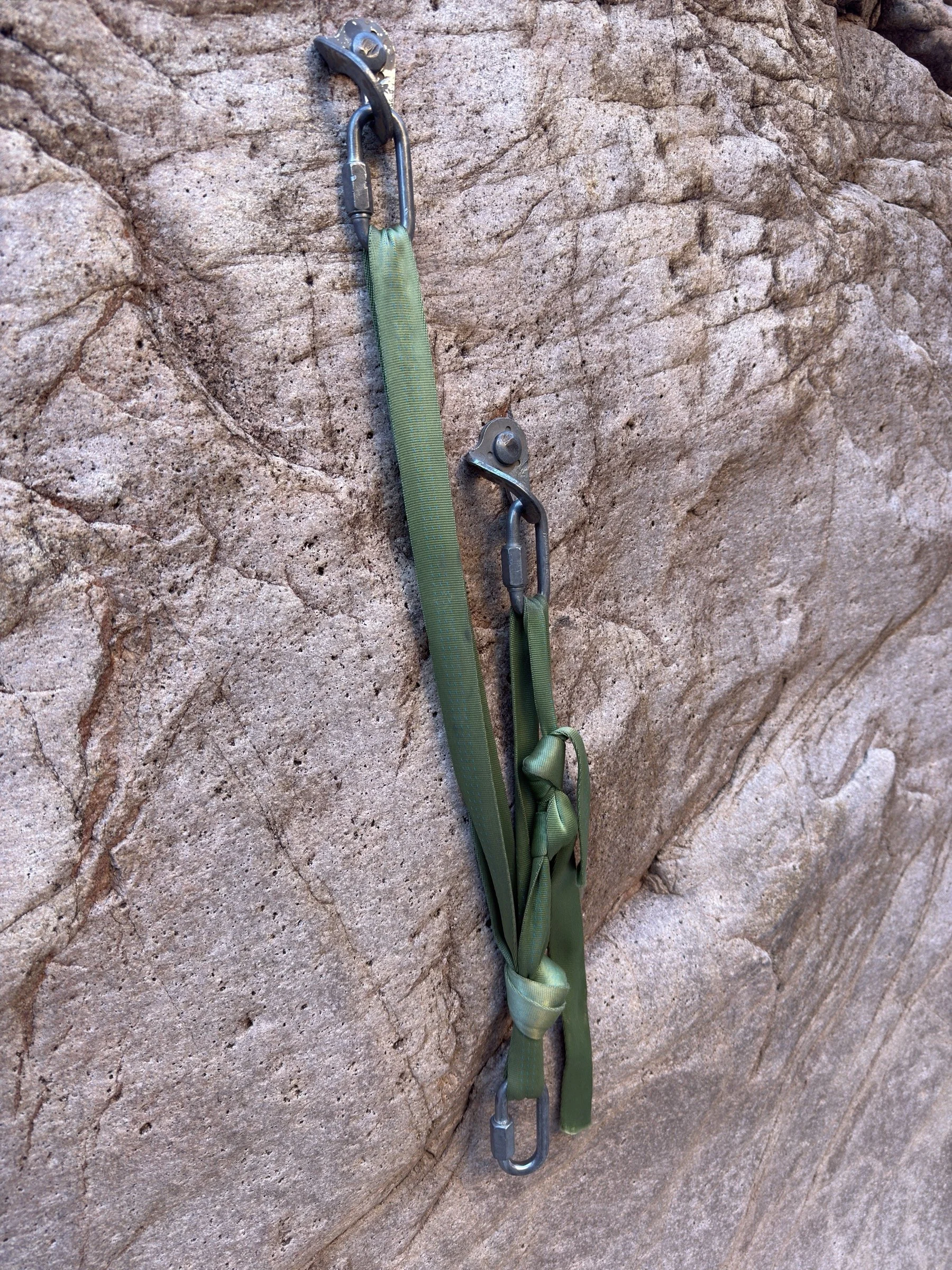
Rappel anchor #1
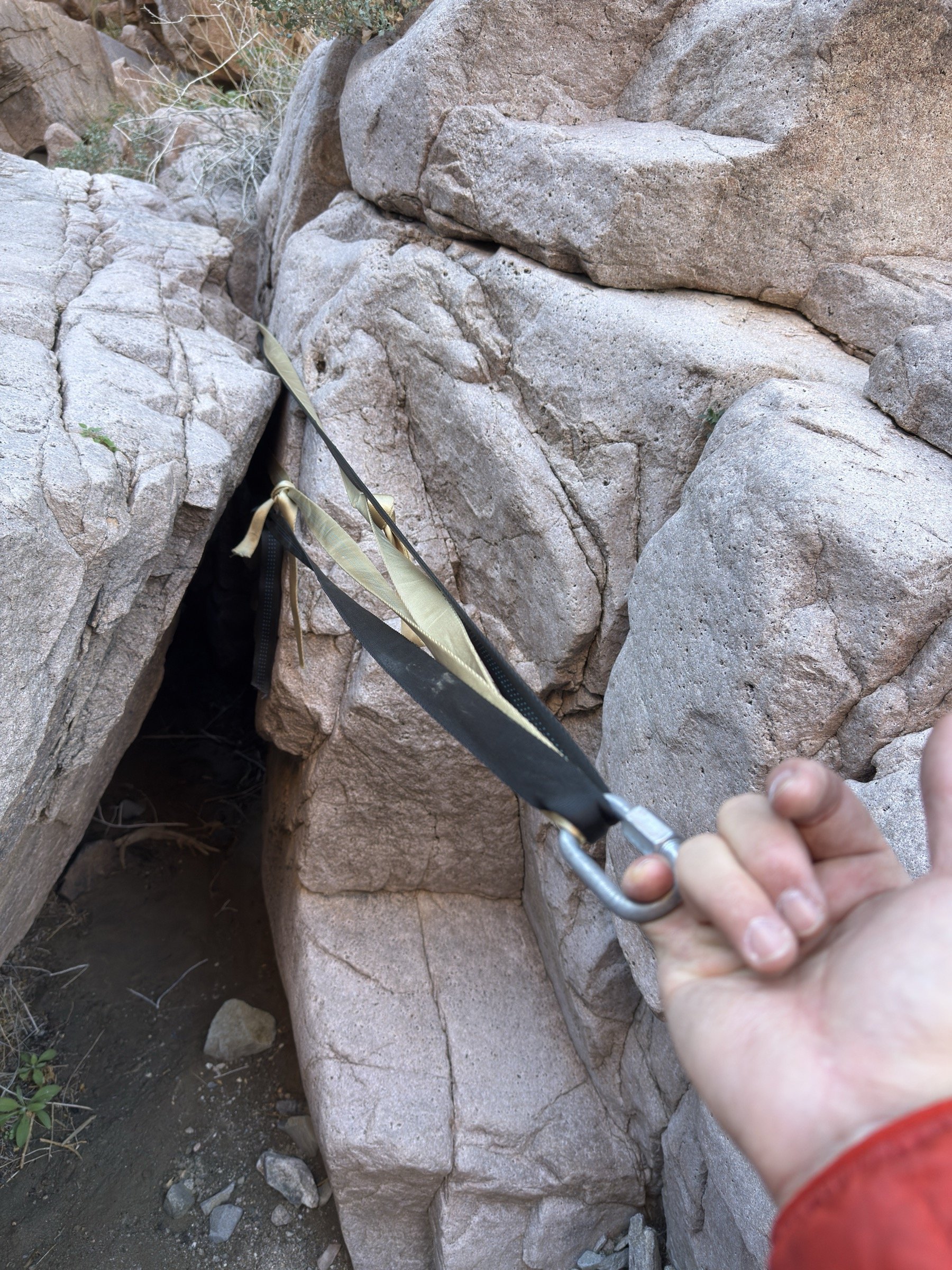
Optional rappel anchor #2
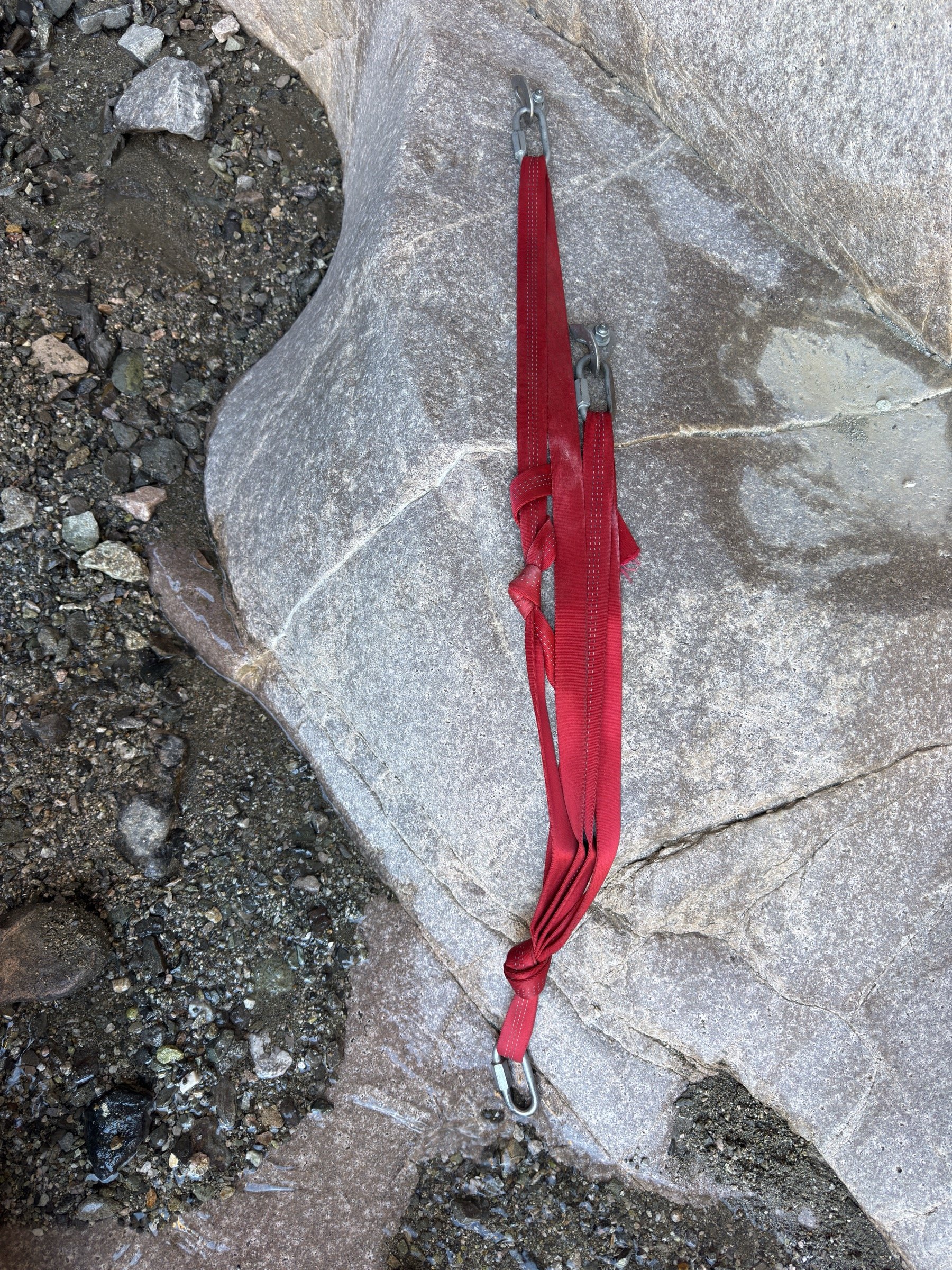
Rappel anchor #3
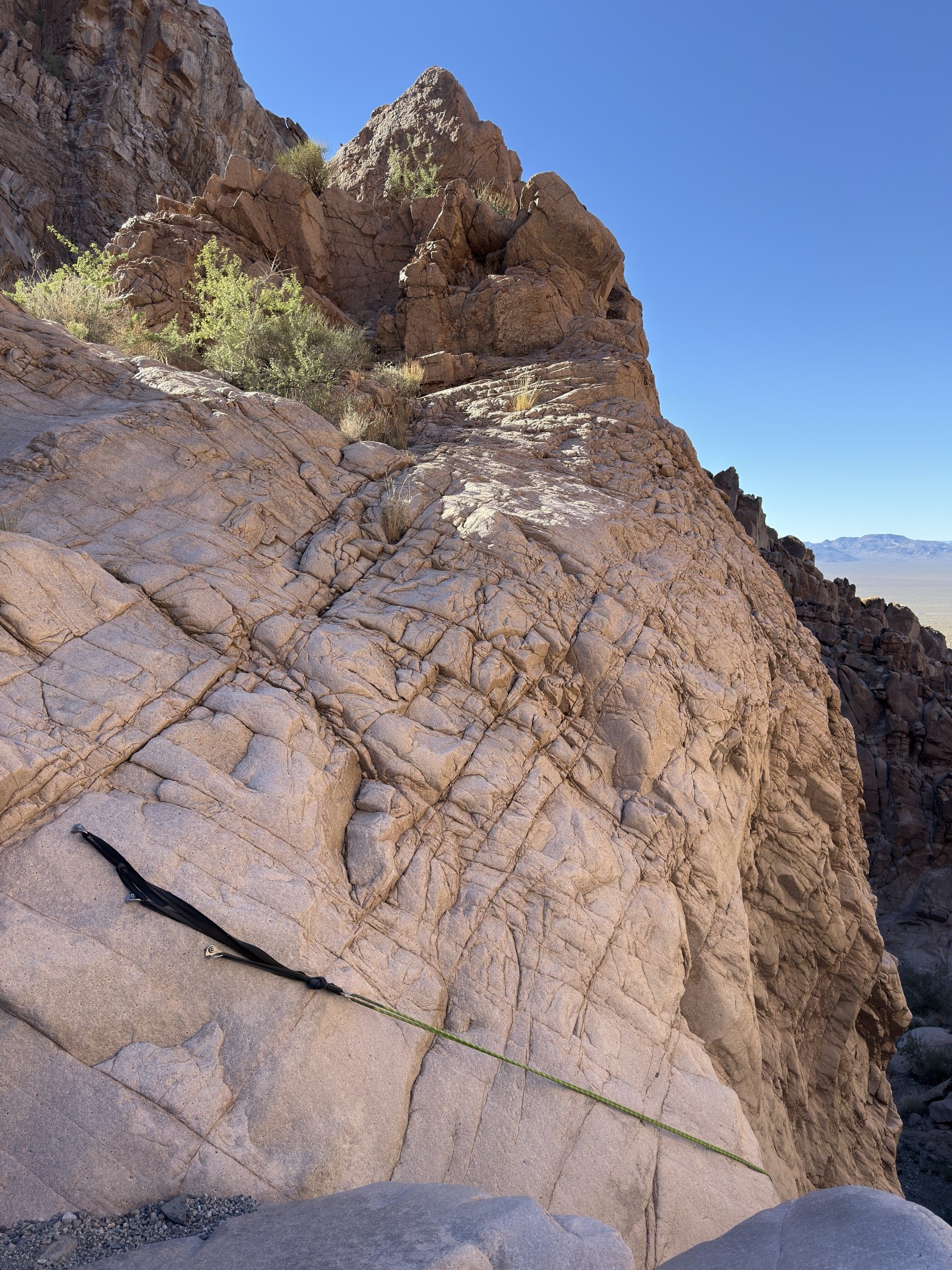
Rappel anchor #4
What Happened?
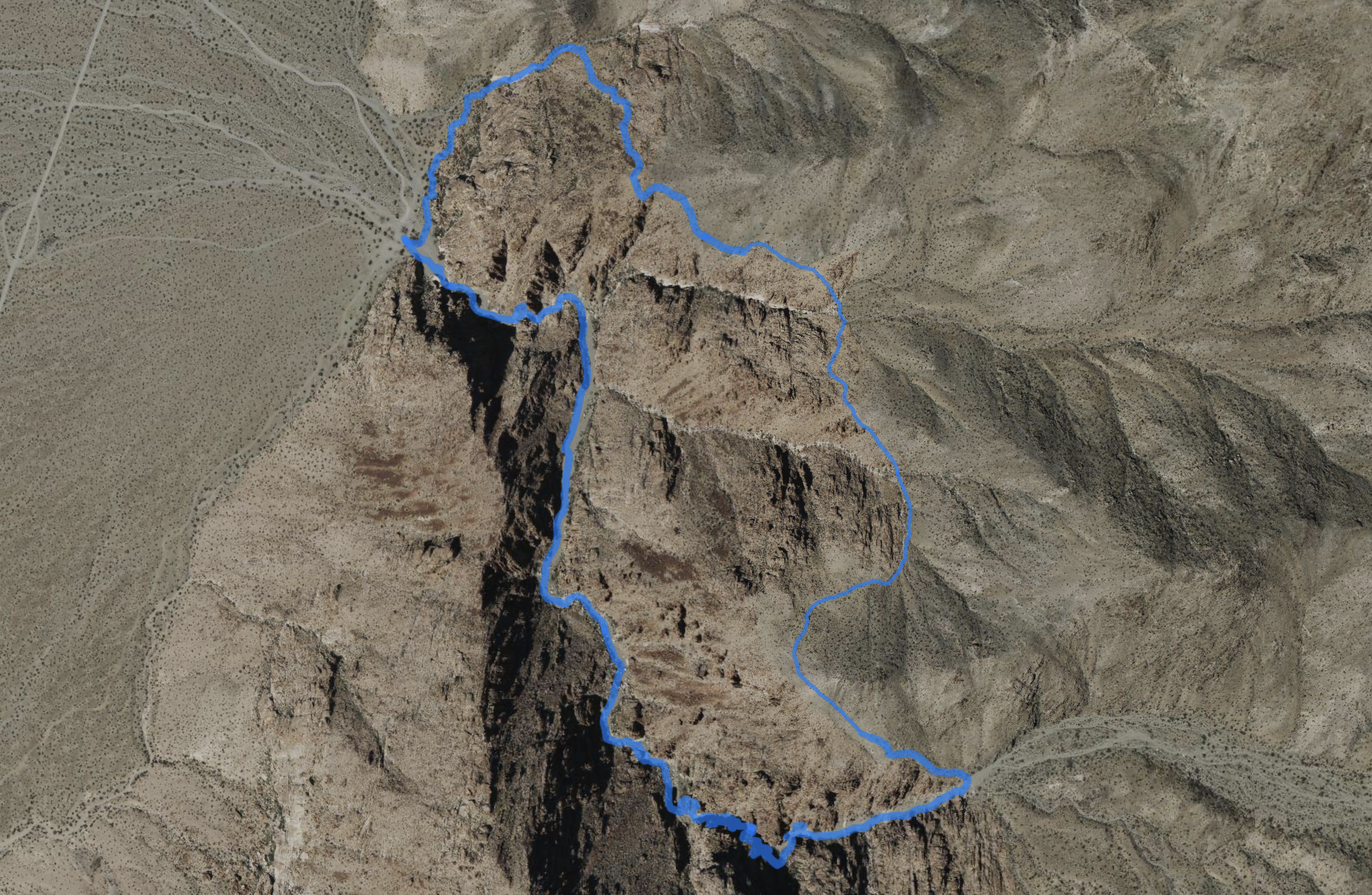
4.0 miles, 4 hrs 20 mins, 814 ft of descent
We love variety to our trips, so while I was looking for things to do in Nevada, I found this canyon on ropewiki.com. When I found out that almost all anchors were bolted, it was easy for me to go for it. In case you’re not aware, in canyoneering, because there is no risk of a factor two fall, the anchors do not have to support the same amount of weight as a rock climbing anchor. Thus, many rock climbers rappel off of sandbags, stacked rocks, downed trees, and other anchors that regular rock climbers would be terrified of.
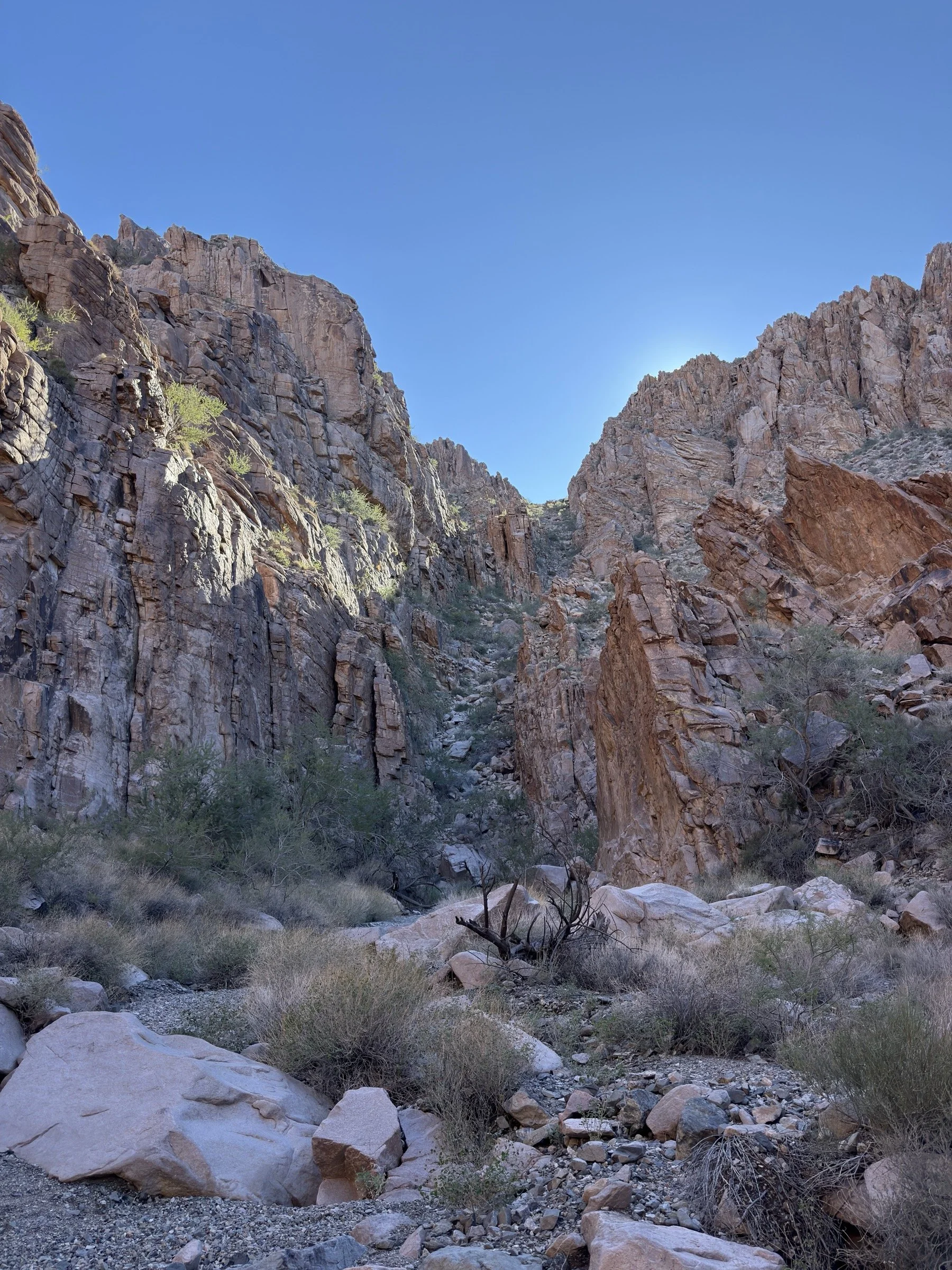
Cassie and I had camped right outside of Keyhole Canyon, so we woke up, got dressed, brushed our teeth, organized our gear, and hiked to the start of the canyon. The hike up to the start was up a small dry fall, before we were able to pick up a faint trail. This trail steadily led us to the top while giving us a commanding view of Highway 95. After a mile and a change, the trail dropped us down to the start of the canyon.
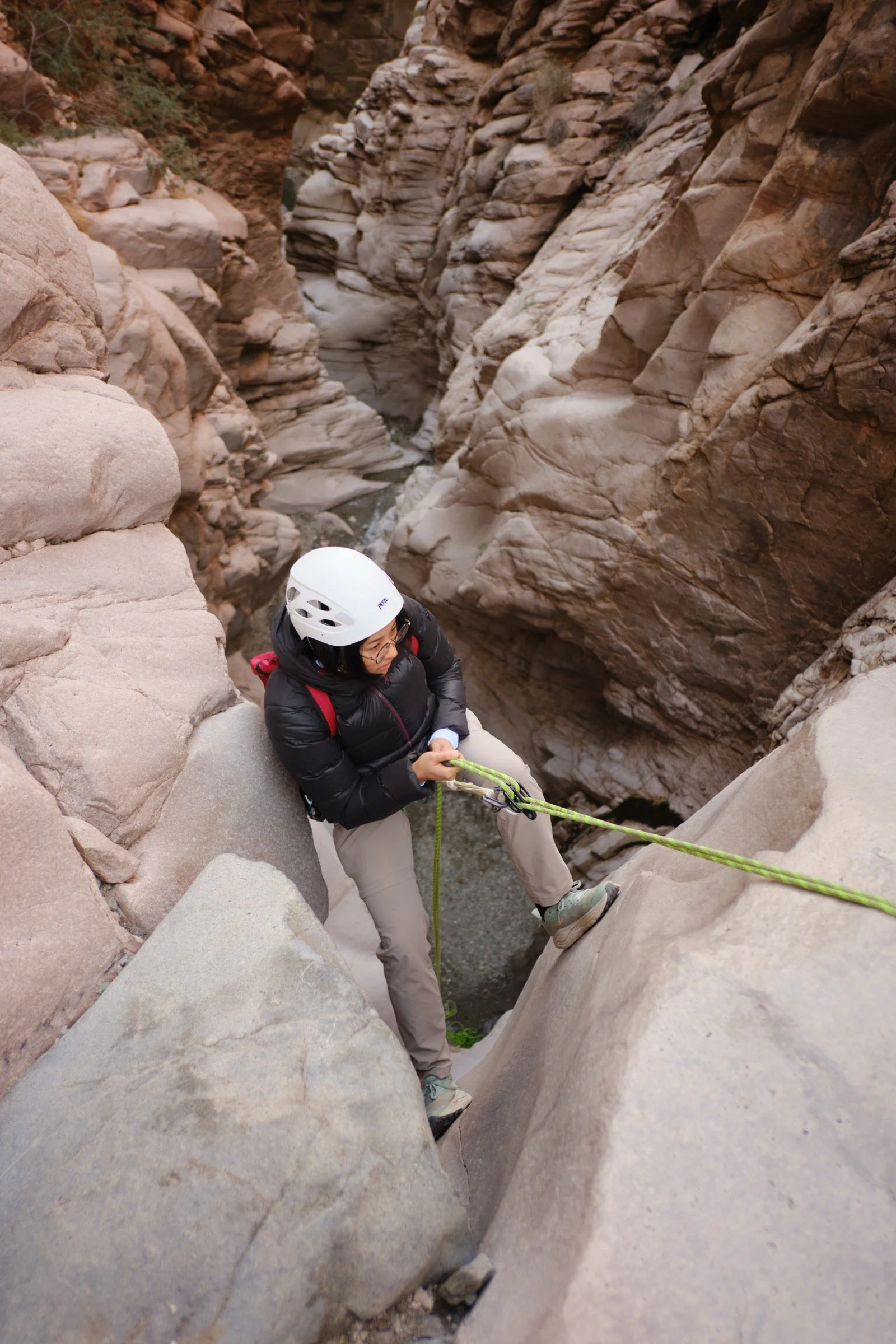
The first rappel had an anchor LDC and it had webbing that connected the bolts together. As mentioned above, this anchor was solid, much like all the other anchors with webbing that we saw. The rappel was an easy 30’ one that was totally dry. Rope wiki mentioned that there might be a bee or hornet nest, but we only found one that was abandoned. Perhaps it was too cold for bees?
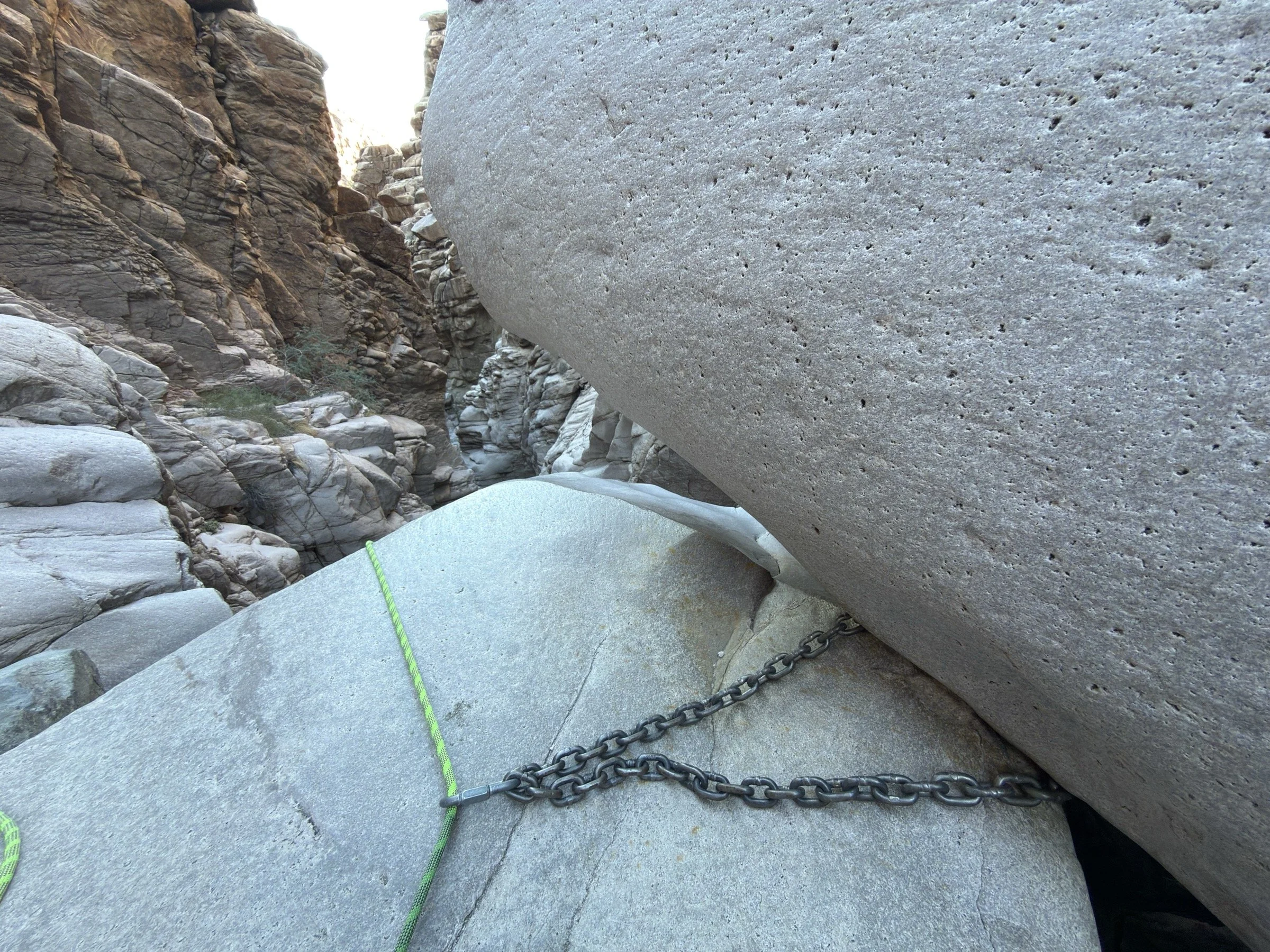
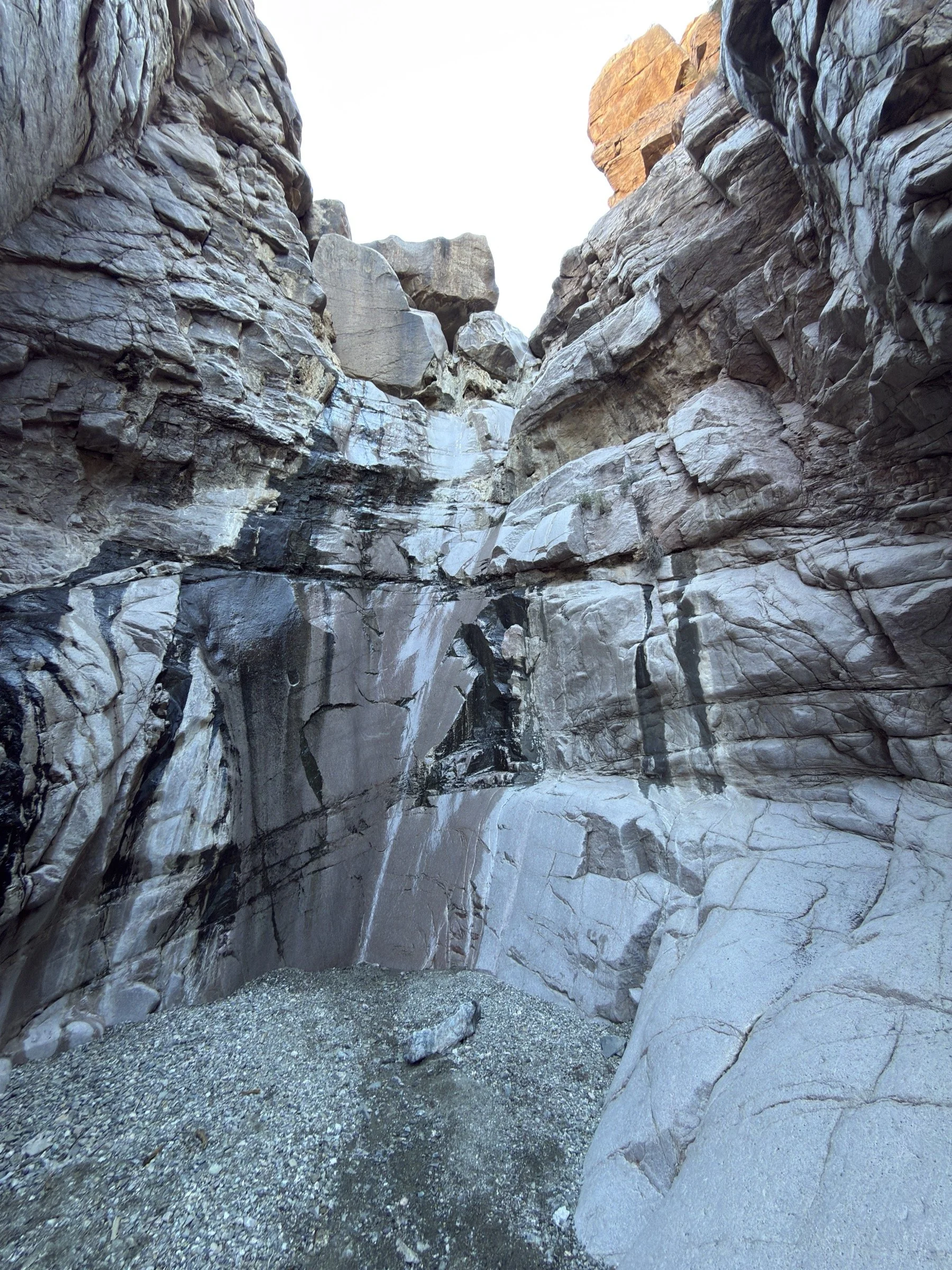
The second rappel, which was close to the first, was a bit taller with a bit of moisture. This 50’ rappel was another easy rappel. There were two anchors on the rappel, one which was a steel linked chain wrapped around where one massive boulder sat on another. The second anchor was a bolted anchor with webbing, much like the first, except that there were two webbing materials supporting the anchor in case one failed. For some reason, one of the webbings was very loose on the anchor (which I fixed while Cassie was tying in for rappel).
The third rappel was two short falls that I think other people jump down. We rappelled these 10’ dry falls as there was a bit of water, we did not want to get wet, and we wanted to rappel. The anchor was RDC.
The fourth was another short rappel that again other people slide down. This was the 10’ stacked rock anchor that made our heart rates go up. Fortunately, there was no drama and the rappel was easy-peasy. It was only 10’ high, so it made it easy to trust the stacked rocks, as the consequences would be low, even if it were to fail.
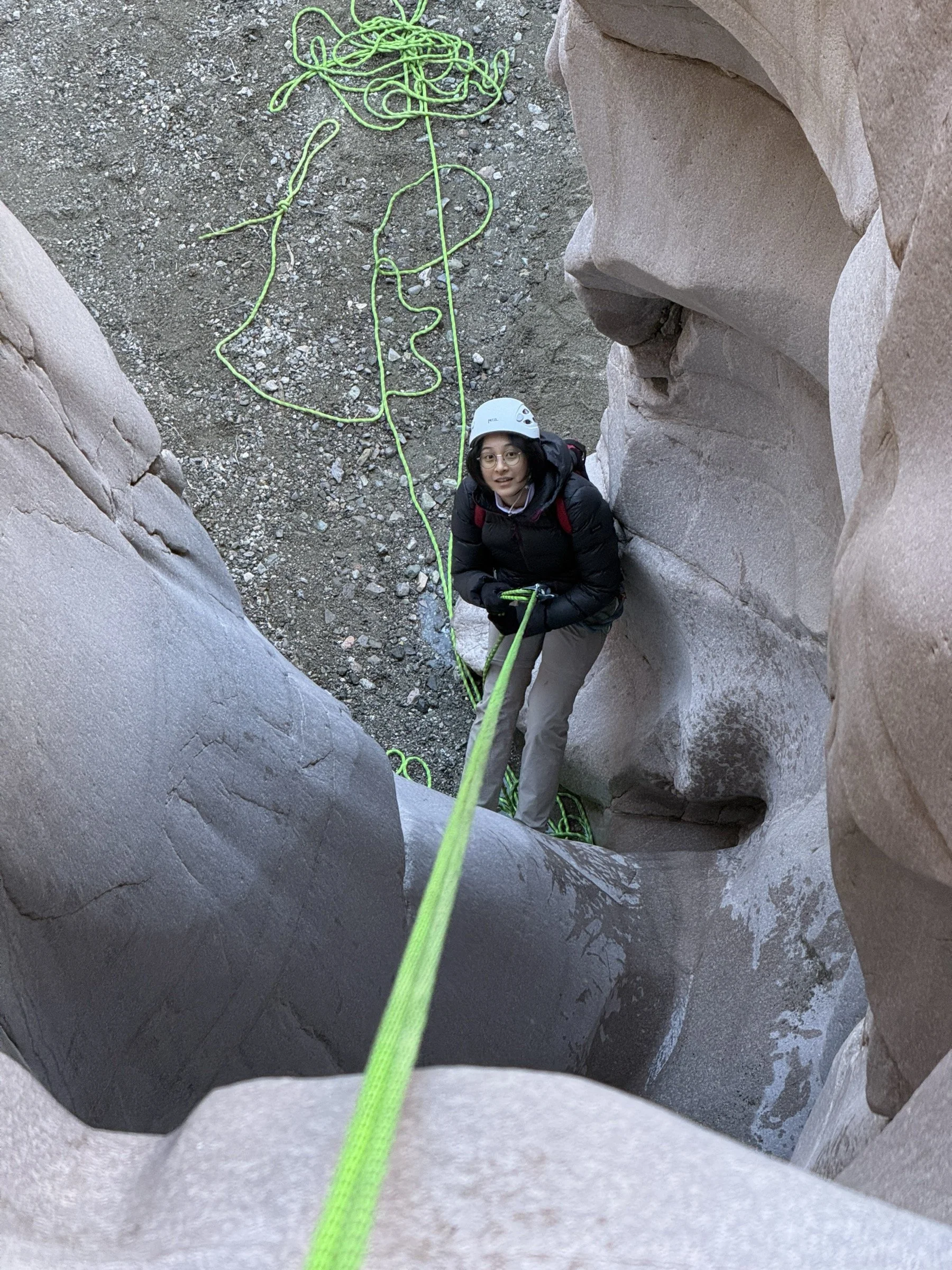
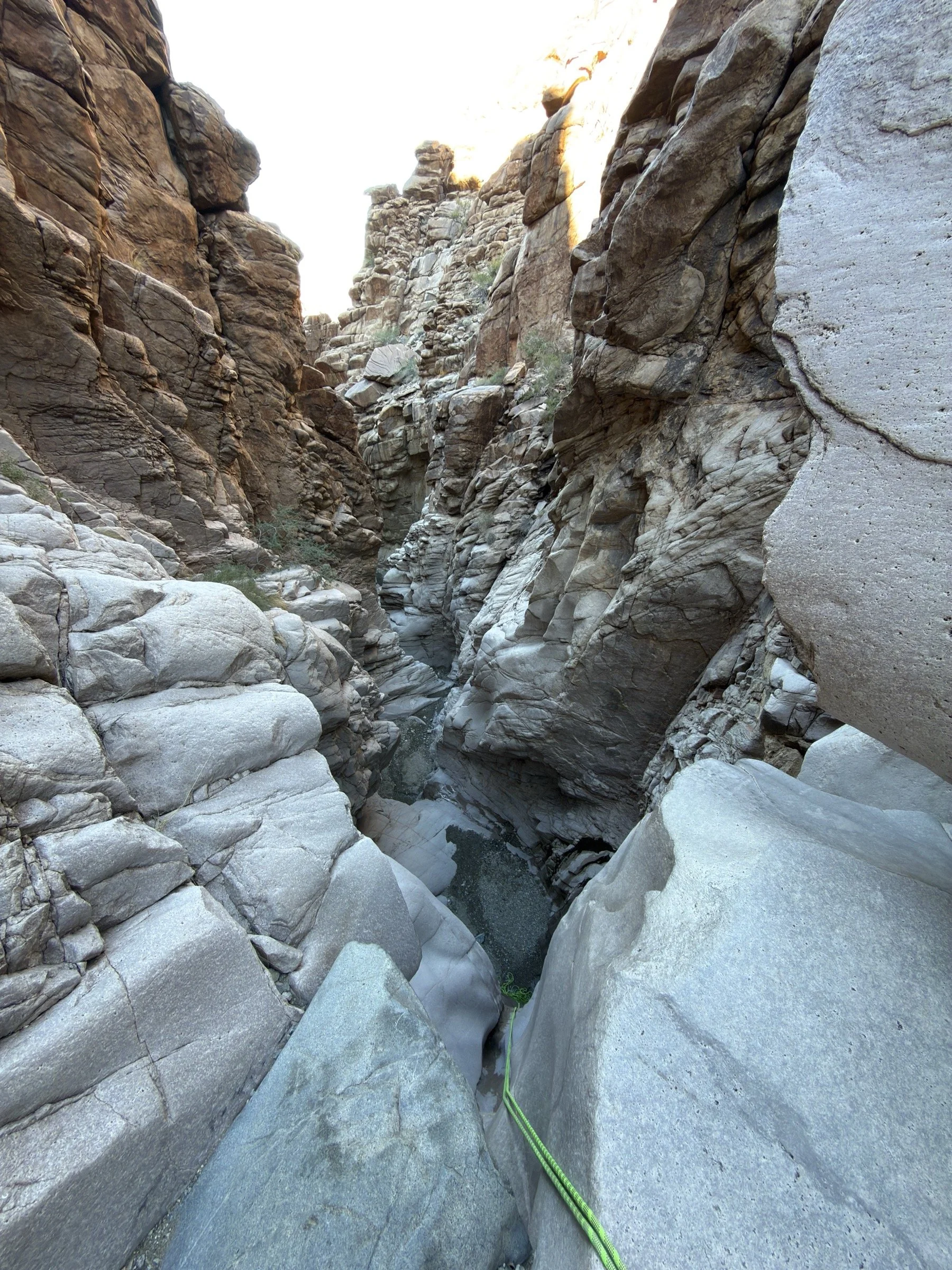
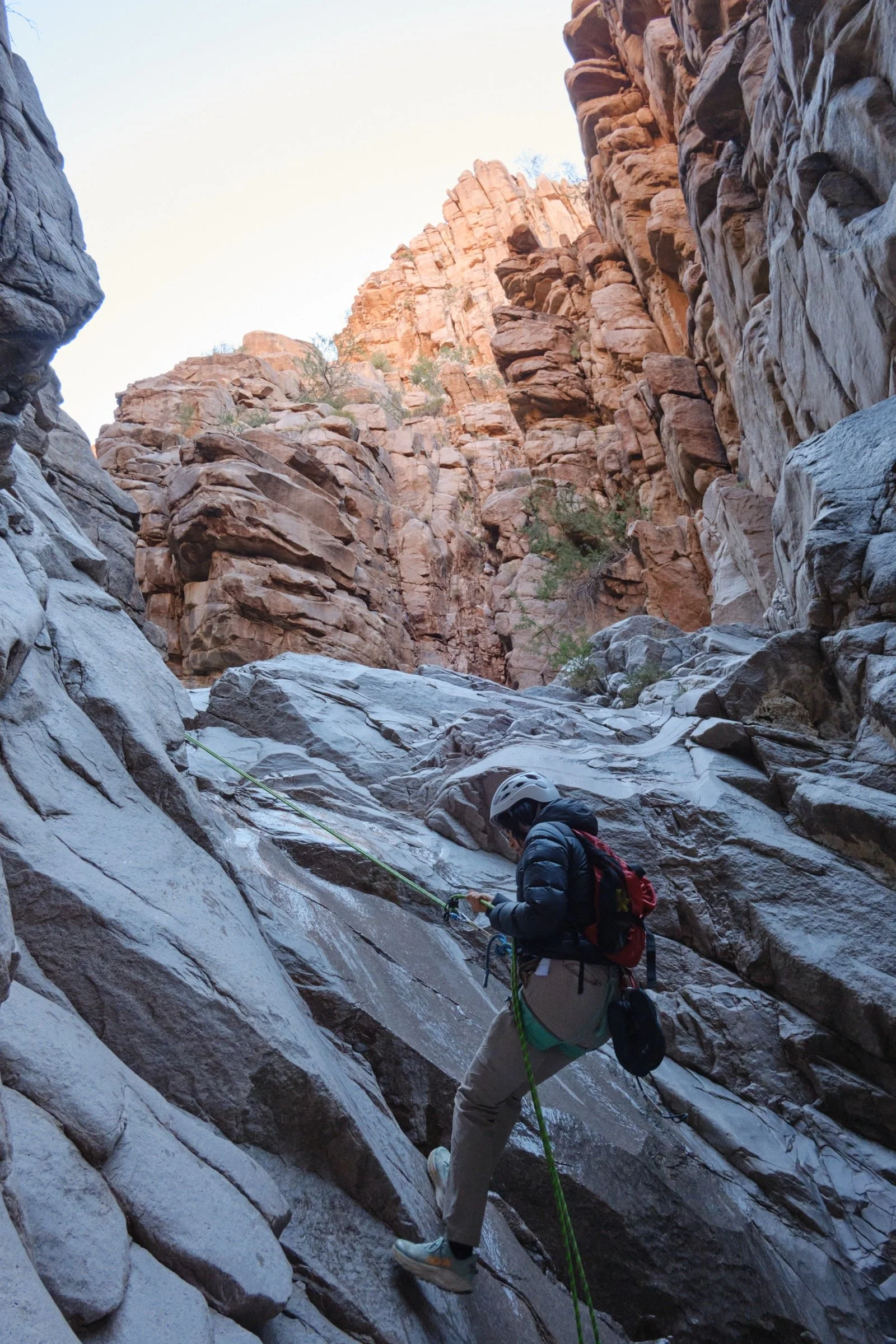
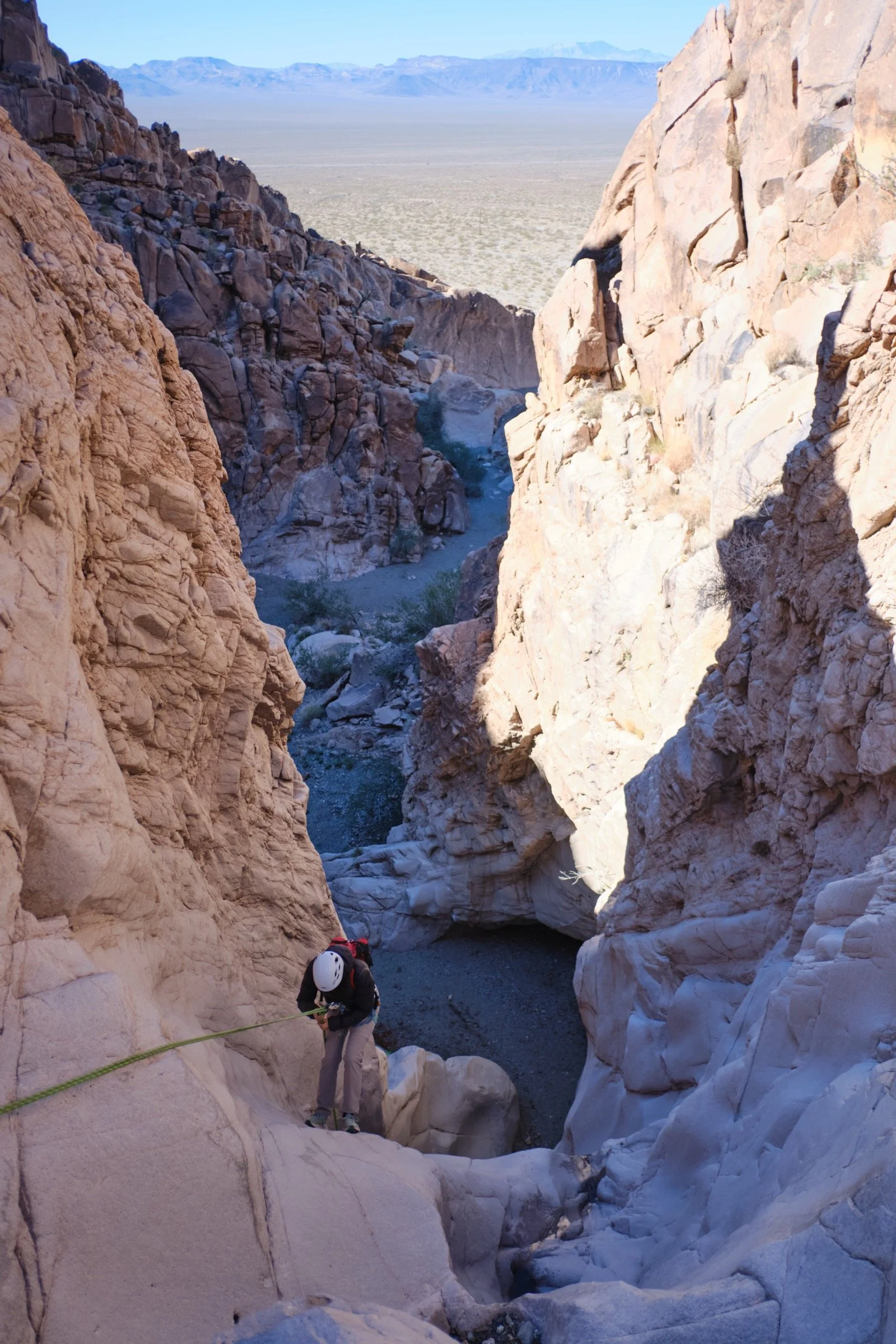
The fifth was a picturesque tall rappel that spilled into a wider canyon. The anchor was bolted webbing LDC. This rappel was the trickiest one of all as the rappel line ran through a vertical half-pipe of sorts and there was a bit more water. We were too vertical with our legs, and so we slipped a few times; though once we made our legs horizontal, we did just fine. The running water gave a meditative feel to the rappel, and it was quite lovely.
Between the fifth and the last rappel, there was a bit of hiking we had to do, and a down climb that felt the scariest. There was this giant boulder wedged in the middle of a drop, and with no anchors visible, we were forced to down climb. There was a route LDC that I had seen others take on rope wiki, but after giving it a try with my backpack on, I felt that it was a bit too spicy. So I reversed course and went RDC. There was a smaller boulder blocking the view, so it felt scary, but it wasn’t too bad once I committed to it (I did also make it easier for myself by throwing my backpack down first).
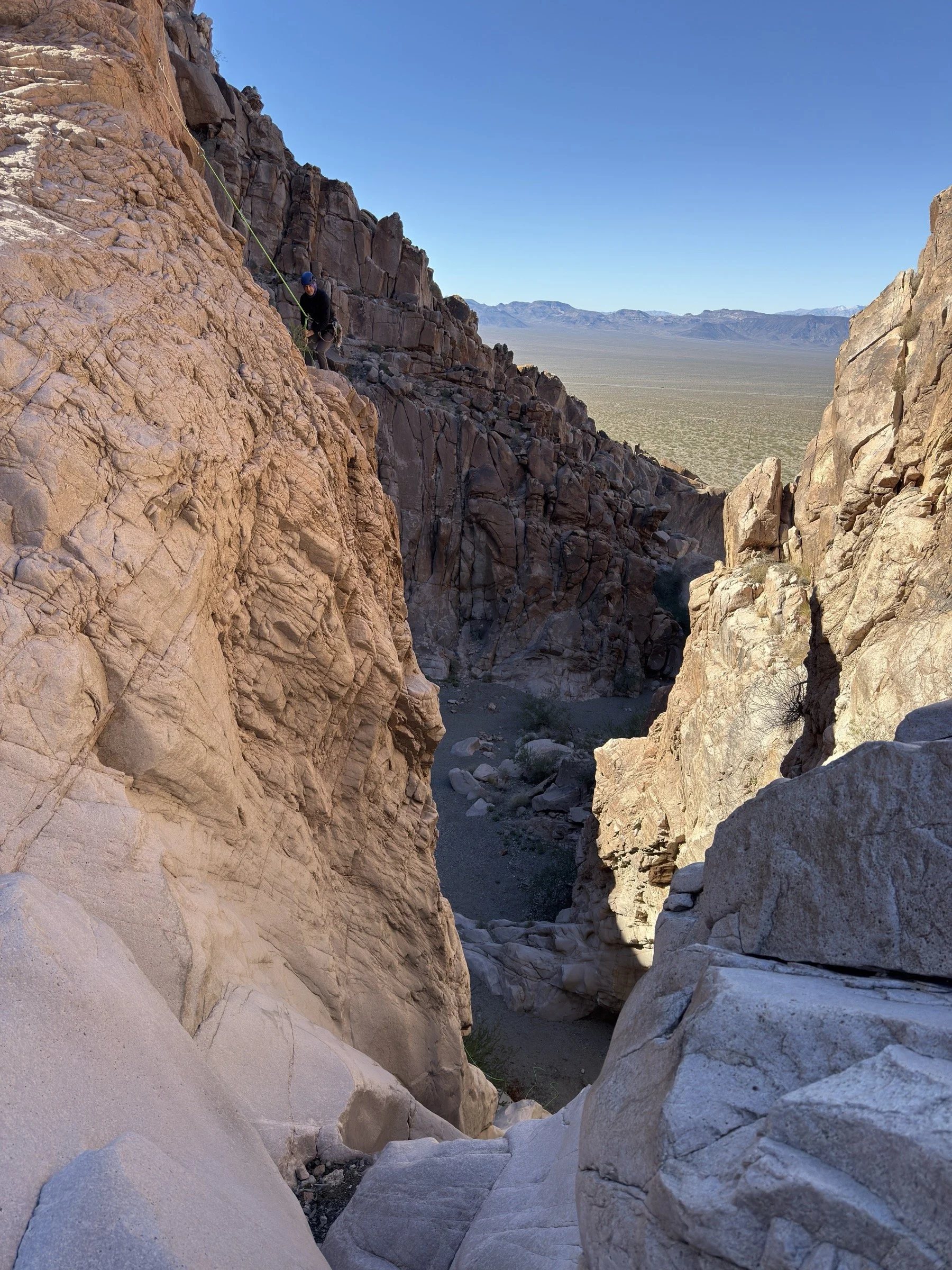
The last rappel was the longest at like 100’ tall. The anchor on this was located LDC and was a triple bolt that was nicely equalized. Because this led us to the bottom of Keyhole Canyon, we saw other climbers having a great time. Actually, when we threw our rope down, the bottommost parts didn’t touch the ground (due to it tangling) and a climber below fixed the rope for us, which was so nice. The rappel itself was fun and we hiked a quarter mile back to our car.
Overall, I was so jazzed about having found such a beginner-friendly canyon and we were so glad to have done this one. We look forward to canyoneering more canyons in the future!